The graphics your reviewer
actually wants to see
PRISMA 2020 flow diagrams (Page et al., BMJ 2021), forest plots with summary diamonds and heterogeneity stats, LogFrame matrices, and lifetime QR-verifiable certificates — all rendered live as scalable SVG. Use the live tools, or take these as reference for your manuscripts.
PRISMA 2020 Flow Diagram
The canonical four-stage flow diagram for systematic reviews and meta-analyses. Identification → Screening → Eligibility → Included. Every PRISMA-compliant manuscript reproduces this exact structure. Below: an editable, downloadable rendering you can drop into your manuscript today.
- Records identified — from each database with counts
- Records removed before screening — duplicates, ineligibles, automation
- Screening — titles/abstracts + full-text excluded with reasons
- Included — final synthesis pool with reasons for exclusion
Reference: Page MJ et al. The PRISMA 2020 statement. BMJ 2021;372:n71
DerSimonian-Laird random-effects model · Cochrane Handbook v6.4 · Reported per PRISMA 2020 + SAMPL
Forest Plot
The visual signature of every meta-analysis. Each row is one study with its risk ratio + 95% CI; the size of the box reflects the study's weight in the pooled estimate. The diamond at the bottom is the random-effects summary — its width is the pooled 95% CI; if it crosses the null line, the result is not statistically significant.
- Logarithmic x-axis — symmetric around the null (RR = 1)
- Study boxes — sized by inverse-variance weight
- Summary diamond — DerSimonian-Laird random-effects
- Heterogeneity — τ², Cochran Q, I² with interpretation band
- Prediction interval — likely effect in a new study
LogFrame Matrix
The canonical 4×4 logical framework used by every bilateral donor, UN agency, and major foundation. Goal · Purpose · Outputs · Activities across the rows; Narrative · OVIs · Means of Verification · Assumptions across the columns. Below: a live preview of what the wizard produces.
- Vertical logic — IF activities → THEN outputs → THEN purpose → THEN goal
- Horizontal logic — every row has indicators + verification + assumptions
- Donor variants — EU/FCDO 4×4 · UNDP 5-row · 1-page compact (auto-recommended)
| Level | Narrative summary | OVIs | MoV | Assumptions |
|---|---|---|---|---|
| Goal Long-term impact |
Reduced maternal morbidity from hypertensive disorders in Bilaspur district. | MMR from hypertensive disorders: 22 → ≤15/100,000 by 2030 | MDSR annual report; HMIS extract | State policy stable; no new contraindications emerge. |
| Purpose Project outcome |
≥70% of eligible nulliparous ANC attendees receive aspirin prophylaxis before 16 wks GA. | % screened at booking: 8% → ≥70% by 2029. % screen-positive initiating aspirin <16 wks: 4% → ≥85%. | ANC register audit (Q); pharmacy data | Coverage translates to reduced PE per ASPRE 2017. |
| Outputs Deliverables |
O1: SOP adopted district-wide. O2: 300 providers trained. O3: Supply chain assured. O4: HMIS revised. | SOP approved by M6. Post-training pass rate ≥95%. Stock ≥95% across PHCs every Q. | DHO order copy; attendance records; PHC stock audits | Training time released; community accepts intervention. |
| Activities What you do |
SOP development · TOT cascade training · Procurement + buffer stock · Supportive supervision · KAP campaign. | Inputs / Budget: Personnel ₹38L · Training ₹14L · Procurement ₹22L · M&E ₹9L · Indirect ₹8.8L. Total ₹96.8 lakhs. | Quarterly progress reports; financial audit | Funds disbursed on schedule; political continuity. |
EU/FCDO 4×4 variant · downloads as editable Word .doc with A4 margins

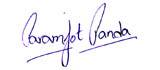
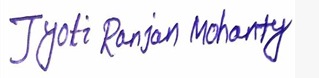
This is the actual certificate generator — same HTML the engine emails on course completion. Sample shown for our founder Dr Paramjot Panda; logo, dual signatures, and QR code are all real (the QR resolves to the live verification page when scanned).
URN Academy Certificate
Issued automatically when a learner completes all 4 levels of any URN Academy course (Research Methods · Data Analysis · HNA · AISRMA). Each carries a unique ID, dual signatures, and a QR code that resolves to a public verification page — so any employer or institution can confirm authenticity in one scan.
- Tier ladder — Bronze (L1) → Silver (L1-2) → Gold (L1-3) → Platinum (full course)
- Auto-emailed at every tier with a shareable SVG badge
- Public verification — anyone can validate via the QR or ID
- Lifetime validity — never expires
Tier Badges
Every URN Academy course has a 4-tier ladder. Bronze unlocks when you finish Level 1; Silver after L1-2; Gold after L1-3; Platinum is the full Certificate of Completion shown above. Each badge is auto-emailed as a shareable SVG — LinkedIn-ready, prints clean at any size, never goes pixelated.
- Auto-issued when you cross a level boundary (one per learner, per course, per tier)
- Themed per course — Research Methods (green) · Data Analysis (indigo) · HNA (pink) · AISRMA (sky-blue)
- SVG output — scales infinitely, opens in any browser, sharable on LinkedIn / portfolio sites
- Same engine as certificate — sample badges below show our founder Dr Panda's AISRMA progression
Bronze · Level 1
Foundations done
Silver · Levels 1-2
Screening done
Gold · Levels 1-3
Extraction & RoB done
The 4-tier progression
BRONZE
L1
SILVER
L1-2
GOLD
L1-3
PLATINUM
Certificate
Every course follows this ladder. Platinum unlocks the QR-verifiable Certificate of Completion shown in Panel 4.
Live SVG output from urnBadgeSVG() — same engine that emails badges when learners cross a level boundary
Directed Acyclic Graphs
A DAG is a picture of your causal hypothesis. Once it's on paper, the bias paths you have to close become obvious — and the variables you must not adjust for (mediators) become equally obvious. URN's free in-browser DAG builder produces these.
- Exposure → Outcome — the causal effect you're estimating
- Confounders — variables that cause both; must adjust
- Mediators — sit on the causal path; must not adjust if total effect is the target
- Colliders — adjusting opens a bias path; must avoid
- Backdoor criterion — the formal rule for which paths to block
Example: low-dose aspirin → pre-eclampsia, adjusting for maternal age and prior hypertension. Placental blood flow is a mediator (don't adjust). Unmeasured genetic predisposition is a residual backdoor — sensitivity analysis required.
Sample Size Calculator
Plug in your expected effect, alpha, and power. Get the per-arm sample size with formula transparency — so the IEC reviewer can verify the math, and you can defend your number under questioning.
- → Two-proportion test for binary outcomes (default shown)
- → Continuous outcomes — two-sample t-test mode
- → Survival / time-to-event — log-rank test mode
- → Dropout inflation automatically applied
= (1.96 √2·0.095·0.905 + 0.842 √0.12·0.88 + 0.07·0.93)² / (0.12 − 0.07)²
= (0.811 + 0.341)² / 0.0025 = ≈ 530 per arm
nadjusted = 530 / (1 − 0.15) = ≈ 624 per arm
Illustrative — based on the aspirin-in-pregnancy use case used elsewhere on this page. Replace the inputs with your own numbers in the live calculator.
Boolean Search Strategy
A reproducible search is the spine of every systematic review. Stack concept blocks with AND, expand each block with OR + MeSH + free-text — then translate to every database (PubMed, Embase, Cochrane CENTRAL, Scopus, Web of Science) without losing fidelity.
- → One concept block per PICO element
- → MeSH + Emtree + free-text in every block
- → Truncation + wildcards for spelling variants
- → Cross-database translation tracked + exported per PRISMA-S
("Pregnancy"[Mesh] OR pregnan*[tiab] OR gestation*[tiab] OR antenatal[tiab] OR "first pregnan*"[tiab]) AND ("Parity"[Mesh] OR nulliparous[tiab] OR nullipara*[tiab] OR primigravida*[tiab])
("Aspirin"[Mesh] OR aspirin[tiab] OR "acetylsalicylic acid"[tiab] OR ASA[tiab]) AND (low-dose[tiab] OR "60 mg"[tiab] OR "75 mg"[tiab] OR "81 mg"[tiab] OR "100 mg"[tiab] OR "150 mg"[tiab])
"Pre-Eclampsia"[Mesh] OR "Hypertension, Pregnancy-Induced"[Mesh] OR "pre-eclampsia"[tiab] OR "preeclampsia"[tiab] OR "pregnancy hypertension"[tiab] OR "gestational hypertension"[tiab] OR "HELLP"[tiab]
"Randomized Controlled Trial"[Publication Type] OR "randomized"[tiab] OR "randomised"[tiab] OR "controlled trial"[tiab] OR "placebo"[tiab] OR "double blind"[tiab] OR "Random Allocation"[Mesh]
Final hits · PubMed
2,847
After deduplication across 5 databases: 3,452 unique records
Reproducibility
Search executed: 14 March 2026 · Re-run schedule: monthly · PRISMA-S checklist: 14 of 14 items reported
Live preview from the AI SRMA Suite search builder. Concept-by-concept hit counts let you spot over- or under-coverage before submitting. Build your own search.
All four, free to use right now.
No login wall on the reference pages. Sign-in only when you start a draft you want to save or download.